AI Tools

Musk vs Altman Trial Explained: What It Could Mean for ChatGPT, Grok and the Future of AI Tools

Musk vs Altman Trial Explained: What It Could Mean for ChatGPT, Grok and the Future of AI Tools

Musk vs Altman Trial Explained: What It Could Mean for ChatGPT, Grok and the Future of AI Tools

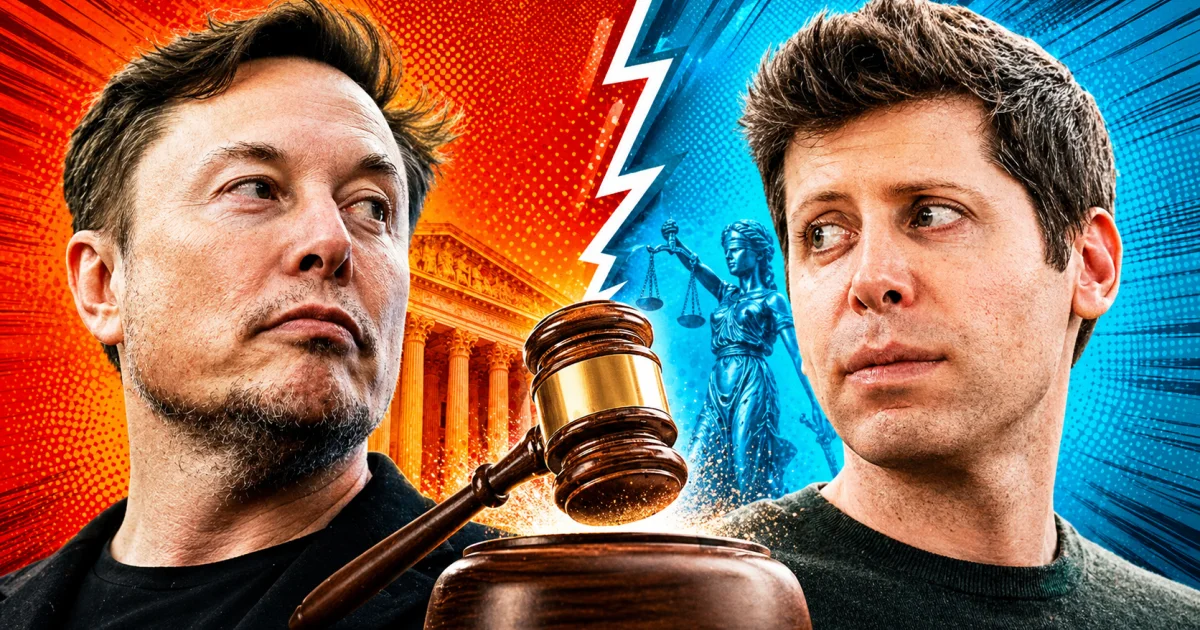
The Musk vs Altman trial is not just a personal fight between two famous tech billionaires. It is a much bigger story about OpenAI, ChatGPT, Grok, Microsoft, artificial intelligence governance and the future of the AI tools people use every day. For anyone who uses ChatGPT for writing, coding, research, business automation or content creation, this legal battle is worth understanding.

At the center of the dispute is a serious question: did OpenAI stay true to its original nonprofit mission, or did it move too far toward commercial power? Elon Musk, who co-founded OpenAI in 2015 with Sam Altman and others, says OpenAI changed direction in a way that betrayed its founding purpose. OpenAI denies that claim and argues that Musk is now trying to damage a major AI competitor after leaving the company and later building his own AI startup, xAI.

This is why the case matters beyond Silicon Valley drama. OpenAI is no longer a small research organization. It is the company behind ChatGPT, one of the most influential AI tools in the world. Its decisions can affect developers, businesses, students, creators, researchers, publishers and ordinary users who rely on AI every day.

The trial also arrives at a time when artificial intelligence is becoming part of search, office software, coding tools, customer service, education, marketing, design and even personal productivity. That means the outcome of this case could influence how people think about trust, control, pricing, safety and competition in the AI industry.

This article explains the Musk vs Altman trial in simple language, why it matters for ChatGPT users, how Grok and xAI fit into the story, what developers should watch, and why this case may shape the future of AI tools more than many people realize.

Quick Summary: What Is the Musk vs Altman Trial About?

The Musk vs Altman trial is mainly about whether OpenAI broke its original mission. OpenAI was founded as a nonprofit in 2015 with the goal of developing artificial intelligence for the benefit of humanity. Musk says he supported OpenAI because it was supposed to be different from traditional profit-driven technology companies.

Over time, OpenAI created a more commercial structure so it could raise money, build powerful models and compete with other major AI companies. That shift is now one of the biggest issues in the legal fight. Musk claims OpenAI moved away from its founding promises. OpenAI says the changes were necessary to advance the mission and that Musk understood the need for a different structure.

The case also involves Microsoft, which became a major partner and investor in OpenAI. Musk’s side argues that Microsoft benefited from OpenAI’s commercial direction. Microsoft denies wrongdoing and says its partnership with OpenAI began after Musk had already left the company.

In simple terms, this case is about mission, money, control and trust. It asks whether a company building powerful AI can remain focused on public benefit while also raising billions of dollars and competing in a global technology race.

Why This Case Is Bigger Than Billionaire Drama

It is easy to look at the Musk vs Altman trial as entertainment. Elon Musk and Sam Altman are both famous, powerful and controversial in their own ways. Their public arguments, online comments and business rivalry naturally attract attention. But reducing this case to a personal feud would miss the bigger picture.

This case is really about the future structure of artificial intelligence companies. As AI tools become more powerful, the public needs to understand who controls them, how they are funded, what their incentives are and whether their original promises still matter.

OpenAI started with a public-benefit mission. That mission helped it attract support from people who believed advanced AI should not be controlled only by large corporations. But today, OpenAI is deeply connected to commercial products, paid subscriptions, enterprise deals, developer APIs and partnerships with major companies.

That does not automatically mean OpenAI did something wrong. Building advanced AI is expensive. Training large models requires huge computing power, expert teams, cloud infrastructure and long-term funding. A purely nonprofit model may not be enough to compete with companies like Google, Meta, Anthropic, xAI and other AI labs.

Still, the concern is understandable. When a company talks about humanity, safety and public benefit, people naturally expect transparency. If that same company becomes one of the most valuable AI companies in the world, the public will ask whether the mission is still the priority.

How OpenAI Started

OpenAI was founded in 2015 as a nonprofit research organization. Its stated goal was to make sure artificial general intelligence, often called AGI, would benefit humanity. AGI usually means AI that can perform many intellectual tasks at or above human level, though experts do not always define it in exactly the same way.

At that time, Elon Musk was already one of the most famous technology entrepreneurs in the world. Tesla was pushing electric vehicles into the mainstream, and SpaceX was changing the rocket industry. Sam Altman was also well-known in Silicon Valley, especially through his work at Y Combinator, but he was not yet a global public figure in the same way.

The early idea behind OpenAI was powerful: build advanced AI, but do it with a public-interest mission. That message helped the company stand out. It was not presented as just another startup chasing profit. It was presented as a serious attempt to guide one of the most important technologies in human history.

But AI development became more expensive and competitive very quickly. As models grew larger, the need for money and computing resources also grew. This pressure pushed OpenAI toward a new structure that could attract investment while still keeping a connection to its original mission.

Why OpenAI’s Structure Became Controversial

The controversy comes from the shift between OpenAI’s original nonprofit identity and its later commercial structure. Supporters of the shift argue that OpenAI needed major funding to compete in the AI race. Critics argue that the move created tension between public benefit and private gain.

This is the heart of the trial. Musk’s side says OpenAI’s commercial direction broke the spirit of the original agreement. OpenAI’s side says the shift was discussed, understood and necessary for the mission to continue.

For normal users, this may sound like a legal technicality. But it matters because company structure influences product decisions. If a company is mainly driven by public benefit, it may make different choices from a company driven by investor returns, market share and valuation.

Those choices can affect pricing, safety rules, model access, API restrictions, product speed, partnerships and how openly the company shares research. That is why this case is not only about the past. It is also about the future direction of OpenAI and the broader AI industry.

Why ChatGPT Users Should Care

Most users do not think about OpenAI’s legal structure when they open ChatGPT. They just want help writing an email, fixing code, learning a topic, creating content or solving a problem. But the company behind a tool affects how that tool evolves.

ChatGPT is now used by students, developers, marketers, founders, customer support teams, teachers, writers, researchers and everyday internet users. It is not a small experiment anymore. It has become part of how many people work and learn.

If OpenAI faces major legal pressure, leadership changes or governance changes, that could eventually influence the company’s products. It may not change ChatGPT immediately, but it can affect long-term strategy.

Users should pay attention to questions like: Will ChatGPT remain affordable? Will API access stay stable? Will OpenAI keep improving consumer tools? Will enterprise users trust the platform? Will safety rules become stricter? Will competition force better pricing and better features?

These questions are not answered by the trial alone, but the case puts them in the spotlight. It reminds users that AI tools are not just neutral software. They are built by companies with legal risks, business goals, investors and competitive pressure.

What This Trial Could Mean for AI Tools

The future of AI tools depends on more than model quality. It also depends on trust, access, pricing, reliability, safety, competition and platform stability. The Musk vs Altman trial touches almost all of these issues.

If OpenAI wins strongly, the company may continue its current direction with more confidence. That could help ChatGPT, OpenAI API products and Microsoft-related AI tools remain central in the market. A strong win could also weaken Musk’s argument that OpenAI betrayed its original mission.

If Musk wins in a meaningful way, OpenAI could face pressure to change its governance, strengthen its nonprofit side or adjust how it operates. That could create uncertainty but also force more public discussion about how advanced AI companies should be controlled.

For users, the most likely short-term result is not that ChatGPT suddenly disappears or changes overnight. The bigger impact may be reputational and strategic. People may ask harder questions about AI companies. Businesses may become more careful about depending on one AI provider. Developers may build systems that can switch between different models.

That is actually a healthy lesson. In a fast-moving AI market, depending completely on one platform is risky. Whether the platform is OpenAI, Google, Anthropic, xAI or another provider, smart businesses should keep flexibility in mind.

Where Grok and xAI Fit Into the Story

Elon Musk is not only a former OpenAI co-founder. He is also the founder of xAI, the company behind Grok. That makes the case more complicated because Musk is now directly involved in the AI competition.

Grok competes with tools like ChatGPT, Claude, Gemini and other AI assistants. It is part of the same race toward more powerful AI systems. Because of that, OpenAI argues that Musk’s lawsuit is not only about principle but also about competition.

This is one of the most interesting parts of the case. Musk says OpenAI moved away from the mission he supported. OpenAI says Musk is trying to damage a rival after leaving the company. Both narratives matter because they shape how the public understands the trial.

For Grok, the case gives Musk a public platform to criticize OpenAI and position xAI as a different kind of AI company. But it also creates risk. The trial may examine Musk’s own role in OpenAI’s early history, his past views on OpenAI’s structure and his current motives as an AI competitor.

That means the trial could affect not only OpenAI’s reputation but also Musk’s reputation in the AI space.

Why Microsoft Is Important in This Dispute

Microsoft is part of the story because it became one of OpenAI’s most important partners. Microsoft provided cloud infrastructure, investment and distribution power that helped OpenAI scale quickly.

For Microsoft, OpenAI’s technology became central to products like Copilot and other AI-powered services. For OpenAI, Microsoft offered the resources needed to train and serve large models at massive scale.

This partnership helped make AI more mainstream. At the same time, it raised questions about influence and control. If OpenAI was founded to benefit humanity broadly, how should people view a deep partnership with one of the largest technology companies in the world?

Again, the answer is not simple. A major AI company needs serious infrastructure. Microsoft has the cloud, capital and enterprise reach to support that growth. But public concern grows when a public-benefit mission becomes closely connected to a massive commercial partner.

That is why Microsoft’s role matters. This case is not just about one company. It is about how the modern AI industry is built around partnerships between labs, cloud providers, investors and platform companies.

Could This Affect Developers Using OpenAI API?

Developers should watch this case, but they should not panic. There is no confirmed reason to believe that OpenAI API access will suddenly disappear because of the trial. However, the case is a reminder that platform risk is real.

Many startups and software tools now depend on AI APIs. Some use OpenAI for chatbots, writing tools, coding assistants, summarizers, data analysis, customer support or automation. If pricing, access rules or company strategy changes, those products can be affected.

The safest approach is to build flexible AI systems. Developers should design their apps so they can switch between providers if needed. For example, an app could support OpenAI today but also be ready to support Claude, Gemini, Grok, Mistral or other models later.

This does not mean OpenAI is a bad choice. It means the AI industry is young, competitive and legally complex. A smart developer does not depend blindly on one provider forever.

For businesses, the same rule applies. If AI is mission-critical, do not build a workflow that breaks completely if one platform changes price, access or policy. Use abstraction layers, keep backup options and monitor provider updates.

Could the Trial Change ChatGPT Pricing?

There is no confirmed sign that this trial will immediately change ChatGPT pricing. Regular users should not assume that a legal case automatically means price increases, product shutdowns or sudden access changes.

However, major legal and governance issues can influence long-term business decisions. If OpenAI faces major pressure, it could affect investor confidence, restructuring plans or leadership strategy. Any of those things could indirectly affect future products.

The more realistic view is this: ChatGPT will likely continue operating normally while the legal process moves forward, but users and businesses should stay informed. AI tools are changing fast, and pricing models can change even without a lawsuit.

For users who rely on ChatGPT daily, it is smart to learn alternative tools too. Claude, Gemini, Grok, Perplexity and open-source models each have different strengths. Knowing multiple tools makes users more flexible and less dependent on one company.

What Could Happen If Musk Wins?

If Musk wins, OpenAI could face serious legal and reputational pressure. The court could order financial remedies, governance changes or other actions depending on which claims succeed and what the judge decides.

A Musk win could also increase public scrutiny of AI companies. Regulators, investors and users may ask more questions about whether AI companies are keeping their promises. Other AI labs may also face pressure to explain their own structures and safety commitments more clearly.

For xAI and Grok, a Musk victory could become a major public relations moment. It could support Musk’s argument that OpenAI lost its original direction. That might help xAI position itself as a competitor with a different mission or philosophy.

But even a Musk win would not automatically solve the bigger AI governance debate. Musk also runs a major AI company. Some observers may still question whether he is the right person to represent public-interest concerns while also competing in the same market.

What Could Happen If OpenAI Wins?

If OpenAI wins, the company may gain stronger support for its current structure and strategy. A strong legal victory could help OpenAI continue raising money, building products and competing aggressively with other AI companies.

It could also weaken Musk’s public argument that OpenAI betrayed its mission. OpenAI may use a win to argue that its structure is legal, necessary and aligned with building safe, useful AI at scale.

However, a legal win would not end all public questions. Many people will still debate whether advanced AI should be controlled by private companies. Others will still ask how public-benefit promises should be protected when billions of dollars are involved.

So even if OpenAI wins in court, it still has to win public trust. That requires transparency, responsible product decisions, strong safety practices and clear communication with users.

Why This Topic Is Important for AI Content Creators

For bloggers, YouTubers, newsletter writers and website owners, the Musk vs Altman trial is a strong content topic because it combines breaking news with practical user questions. People are not only searching for “Musk vs Altman.” They are also searching for what the case means for ChatGPT, Grok, OpenAI, Microsoft, AI tools and the future of AI.

That gives content creators a chance to create useful explainers instead of just rewriting headlines. A good article should answer real questions: What happened? Why are they fighting? What does it mean for ChatGPT users? Could Grok benefit? Will developers be affected? What should businesses watch?

This type of article can be better for SEO than a basic news summary because it targets long-tail search intent. Big publishers may cover the court case quickly, but smaller sites can compete by explaining the practical impact in simple language.

For AdSense-friendly content, the article should be original, neutral and helpful. Avoid copying news articles. Avoid exaggerated claims. Avoid saying someone committed fraud unless a court has decided that. Use careful language like “Musk claims,” “OpenAI denies,” and “the court will decide.”

Best SEO Keywords for This Topic

If you are publishing this topic on an AI news or AI tools website, you should target long-tail keywords instead of only broad keywords. Broad terms like “OpenAI lawsuit” or “Musk Altman trial” will be very competitive because major news websites cover them.

Better keyword targets include:

Musk vs Altman trial explained, OpenAI lawsuit explained, what Musk vs Altman means for ChatGPT, OpenAI trial impact on AI tools, Elon Musk OpenAI lawsuit ChatGPT, Sam Altman OpenAI trial, Grok vs ChatGPT AI rivalry, OpenAI nonprofit mission controversy, Microsoft OpenAI lawsuit explained and future of AI tools after OpenAI trial.

The best SEO strategy is to place the main keyword naturally in the title, first paragraph, a few headings and the meta description. Do not repeat the keyword unnaturally. Google and readers both prefer natural writing.

Suggested SEO Title and Meta Description

SEO Title: Musk vs Altman Trial Explained: What It Means for ChatGPT, Grok and AI Tools

Meta Description: Elon Musk and Sam Altman are facing off over OpenAI’s future. Here is what the trial could mean for ChatGPT, Grok, Microsoft, developers and AI tools.

URL Slug: musk-vs-altman-openai-trial-chatgpt-grok-ai-tools

Best Category: AI News

Recommended Tags: OpenAI, ChatGPT, Elon Musk, Sam Altman, xAI, Grok, Microsoft, AI Tools, Artificial Intelligence, AGI

How To Use This Topic for Internal Linking

This article should not stand alone. If your website focuses on AI tools, you can use this article as part of a larger AI authority cluster. Internal linking can help readers explore related content and help search engines understand your site structure.

You can link this article to future guides such as:

ChatGPT vs Grok: Which AI Chatbot Is Better?

Best AI Tools in 2026 for Creators, Developers and Businesses

OpenAI vs Google Gemini: Key Differences Explained

Best AI Tools for Bloggers and Content Creators

What Is AGI and Why Does It Matter?

This kind of internal linking makes the article more useful. It also helps your website build topical authority around AI tools, AI companies and AI product updates.

FAQ

What is the Musk vs Altman trial about?
The trial is about Elon Musk’s claims that OpenAI moved away from its original nonprofit mission. OpenAI denies wrongdoing and argues that its structure was necessary to continue building advanced AI systems.

Why is Elon Musk suing OpenAI?
Musk says OpenAI changed direction from its original mission and became too focused on commercial interests. OpenAI says Musk’s claims are wrong and that he is motivated by competition and regret after leaving the company.

Could this trial affect ChatGPT?
There is no confirmed sign that ChatGPT will immediately change because of the trial. However, the case could affect OpenAI’s long-term strategy, reputation, governance and public trust.

What does this mean for Grok?
Grok is the AI chatbot from Elon Musk’s company xAI. Because xAI competes with OpenAI, the trial also has a competitive angle. A Musk victory could help xAI’s public positioning, while an OpenAI victory could strengthen OpenAI’s current direction.

Is Microsoft involved in the OpenAI dispute?
Microsoft is part of the story because it became a major OpenAI partner and investor. Musk’s side argues that Microsoft benefited from OpenAI’s commercial shift. Microsoft denies wrongdoing.

Should developers stop using OpenAI API?
No. There is no need to panic. But developers should build flexible systems that can support more than one AI provider. This reduces risk if pricing, access or policies change in the future.

Is OpenAI still nonprofit?
OpenAI began as a nonprofit and later created a commercial structure connected to its broader mission. The exact structure and whether it stayed true to the original mission are key issues in the dispute.

Why does this case matter for everyday users?
It matters because AI tools like ChatGPT are becoming part of daily work, education and business. The companies behind these tools influence pricing, safety, access, trust and future development.

Final Verdict: Why the Musk vs Altman Trial Matters

The Musk vs Altman trial is one of the most important AI stories to follow because it is not only about two powerful personalities. It is about the future of OpenAI, ChatGPT, Grok, Microsoft and the wider AI tools market.

For regular users, the case is a reminder that AI tools are not just simple apps. They are controlled by companies with business models, legal risks, investors, partnerships and long-term strategic goals.

For developers, the message is clear: use powerful AI platforms, but build flexible systems. Do not depend blindly on one provider forever. The AI market is still young, and legal, pricing or policy changes can affect products built on top of major models.

For businesses, the case shows why AI vendor risk matters. Before building important workflows around any AI platform, companies should understand pricing, privacy, API stability, data rules and backup options.

For content creators and publishers, this is a strong topic because it connects breaking AI news with practical questions people are already searching for. A helpful article can explain not just what happened, but why it matters for ChatGPT users, AI tool users and the future of artificial intelligence.

The final result of the trial is not yet known. Musk may win some arguments. OpenAI may win others. The court may make a narrow legal decision, or the case may create wider pressure on how AI companies explain their missions and structures.

But one thing is already clear: the future of artificial intelligence will not be shaped only by code, models and product launches. It will also be shaped by courts, governance, business incentives, public trust and the people deciding who should control the most powerful AI systems.

That is why this case matters. Not because two billionaires are fighting in public, but because the tools connected to this fight may influence how millions of people work, learn, search, write, build and make decisions in the years ahead.

18 min read
8 views

forum Comments (0)

Leave a Reply

chat_bubble_outline

No comments yet. Be the first to join the conversation!

cookie

Cookie Settings

We use cookies to enhance your browsing experience, serve personalized content, and analyze our traffic. By clicking "Accept All", you consent to our use of cookies. Learn more